Last updated: August 2026
Not every roof problem needs a full replacement. But there are clear warning signs that tell an experienced roofer the existing covering is past the point of economic repair. Here are the seven we see most often across Kent and South East London.
1. Multiple Tiles Slipping or Missing Across the Whole Roof
One or two slipped tiles is a repair. But when tiles are slipping across multiple areas of the roof, it usually means the nail fixings have corroded or fatigued across the board. This is extremely common on 1930s–1960s roofs where tiles were only nailed every fourth or fifth course — a practice that no longer meets BS 5534. Re-nailing individual tiles won't solve a systemic fixing failure.
2. Daylight Visible Through the Roof from Inside the Loft
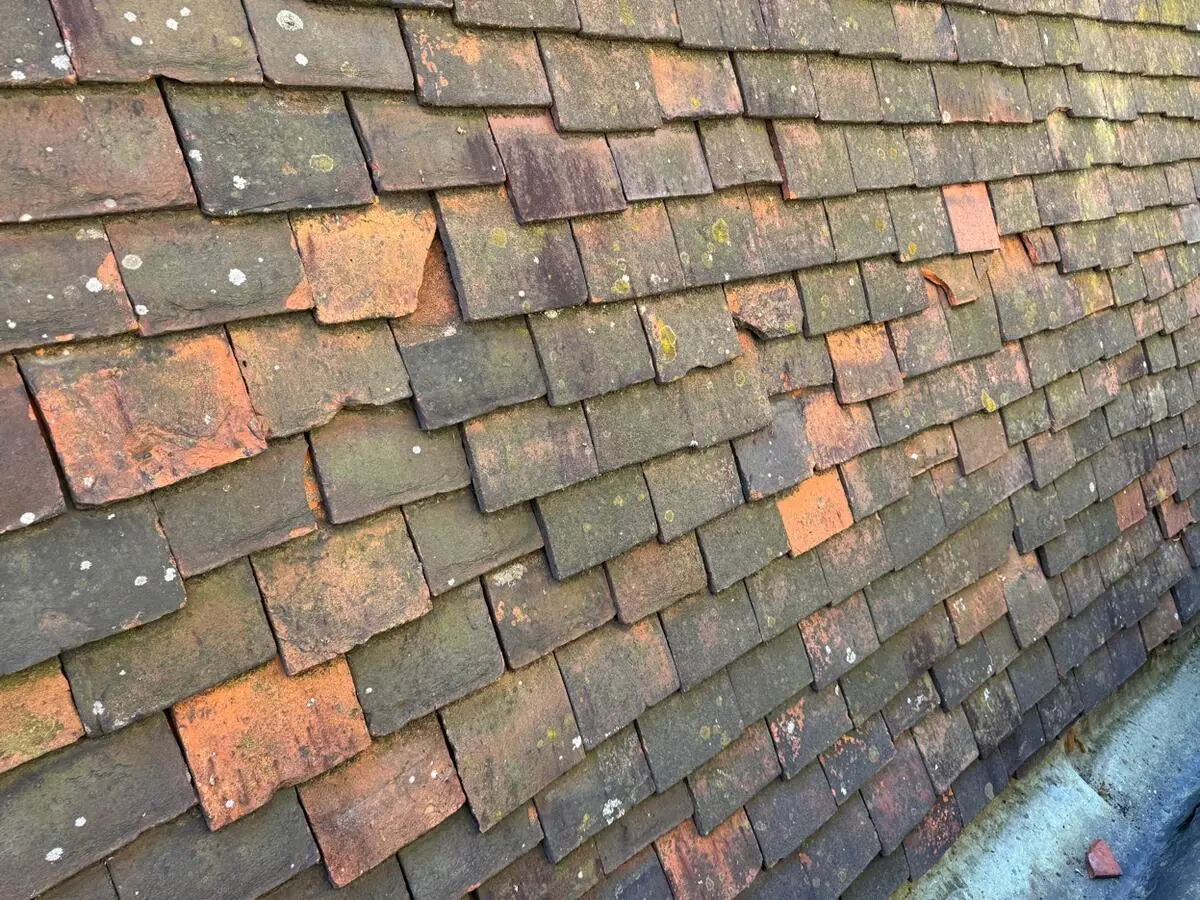
If you can see pinpoints of light when you look up from inside the loft space, the underlay has failed and the tile covering isn't providing a weathertight barrier. This means wind-driven rain is getting through, even if you haven't noticed a drip yet. Once the underlay goes, the only proper fix is to strip and re-cover with new underlay and battens.
3. Sagging or Dipping in the Roof Line
A visible sag in the ridge line or a dip in the roof plane suggests structural movement — either the timbers have weakened from prolonged moisture exposure, or the rafters were undersized for the loading. This is not something you patch over. It needs investigation, and typically a strip to assess and repair the timber structure before re-covering.
4. Persistent Leaks Despite Previous Repairs
If you've had the same roof repaired two or three times and the leaks keep coming back in different places, the underlying system is failing. Water finds new paths when one route is blocked. At some point, the cost of repeated repairs exceeds the cost of doing the job properly once. We'll always tell you honestly when that point has been reached.
5. The Roof Is Over 50 Years Old (Tiles) or 25 Years (Flat)
Concrete tiles have a serviceable life of roughly 40–60 years — read our full guide on pitched roofing for more on tile types and lifespans. Clay tiles and natural slate last longer — 60–100+ years. Flat felt roofs typically last 15–25 years. If your roof is approaching or past these ages, it's worth having it inspected even if you haven't noticed problems yet. Proactive replacement before failure is always cheaper than emergency repairs after water has damaged the interior.
6. Moss Growth Has Compromised the Tile Surface
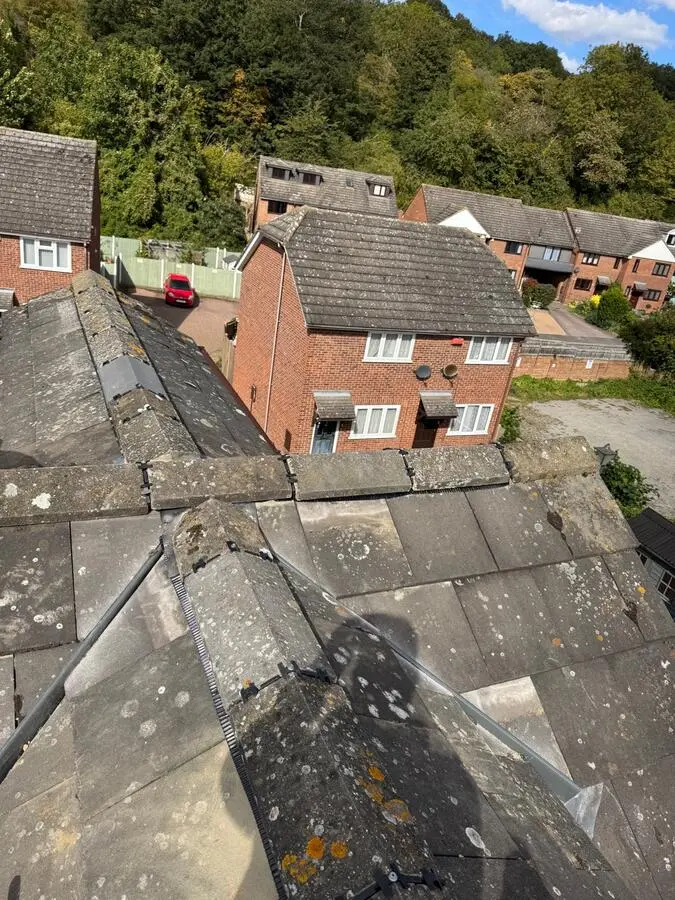
A little moss is cosmetic. But heavy moss growth can lift tile edges, block water drainage channels, and hold moisture against the tile surface, accelerating freeze-thaw damage in winter. If tiles are crumbling, delaminating, or have lost their surface finish, cleaning alone won't restore them — they need replacing.
7. You're Planning a Loft Conversion or Major Extension
If you're about to invest in a loft conversion, it makes financial sense to re-roof at the same time rather than building new rooms under an ageing covering. The scaffolding is already there, the roof is already stripped for the structural work, and you avoid having to re-do everything in five years when the old roof fails.
Not Sure? Get a Free Inspection
If you're seeing any of these signs, we'll come out and inspect your roof for free. We'll take photos, explain what we find, and give you an honest assessment of whether repair or replacement makes more sense for your situation. Call 01634 907 024 or book online.
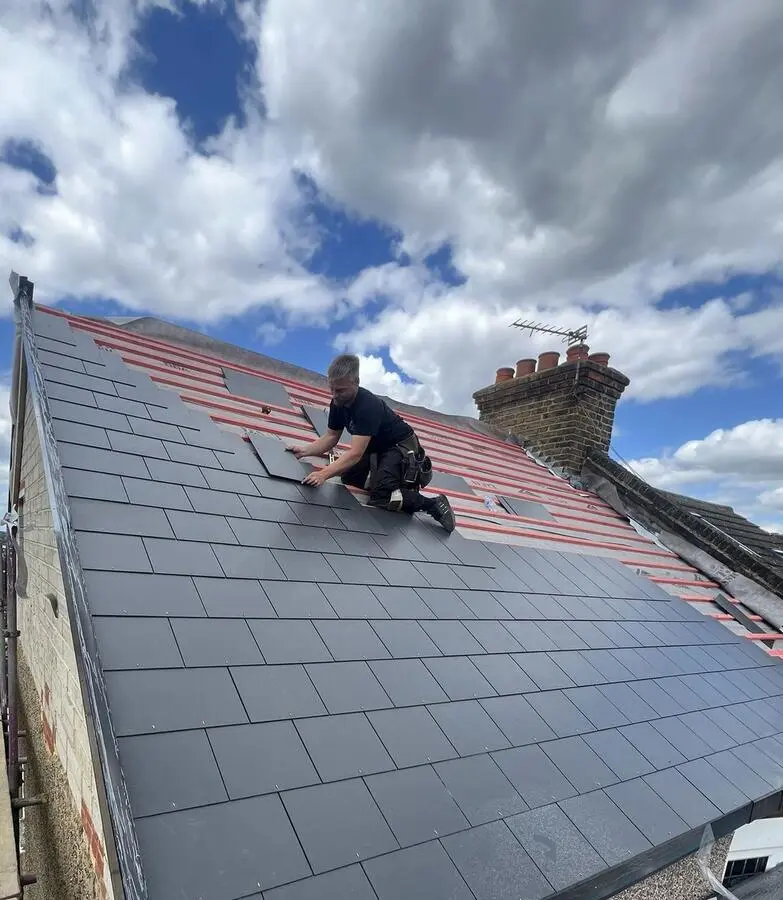
Written by Jordan — Owner, IKON Roofing Ltd
18 years' hands-on roofing experience across Kent and South East London. Every article is based on real jobs, real materials, and real pricing — not guesswork.