Last updated: August 2026
If you need a new flat roof, you'll quickly discover there are three main systems: torch-on felt, GRP fibreglass, and single ply (EPDM or TPO). Every roofer has their favourite. Here's an honest breakdown of what each one actually is, what it costs, how long it lasts, and which we recommend for different situations.
Torch-On Felt (Our Go-To System)
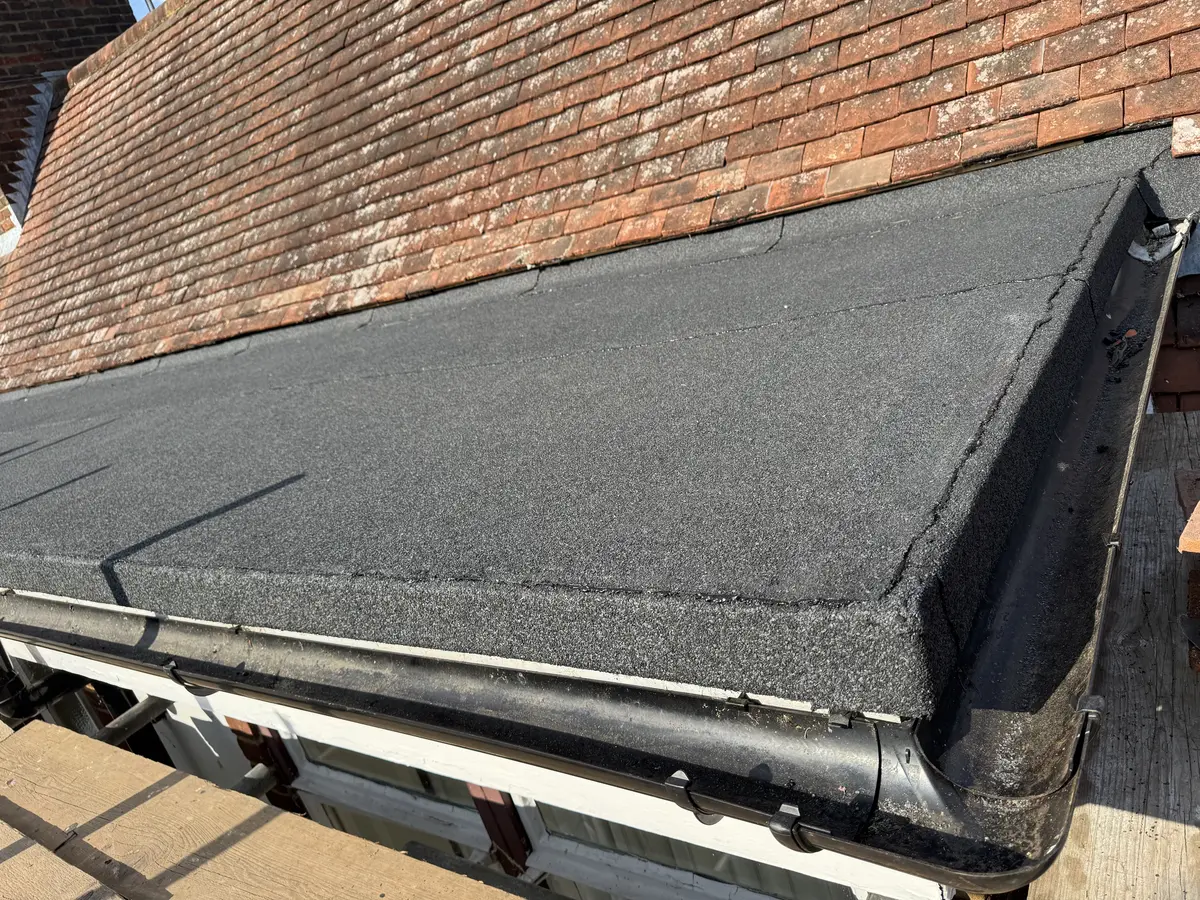
Torch-on is a multi-layer bituminous membrane system. We use the Fix-R 20 three-layer system — a vapour control layer, a reinforced underlay, and a mineral-finished cap sheet, all heat-welded with a gas torch. It's the most common professional flat roofing system in the UK for good reason.
Torch-On Felt at a Glance
The advantage of torch-on is versatility. It works on any shape, any size, handles complex detailing around upstands, outlets, and abutments, and it's straightforward to repair or extend in the future. When a section needs patching in 15 years, any competent roofer can work with it.
GRP Fibreglass
GRP (glass reinforced polyester) is a resin-and-matting system laid wet and cured in place to form a rigid, seamless shell. It's been marketed heavily to homeowners as a "lifetime" roof, which isn't quite accurate.
GRP Fibreglass at a Glance
GRP works well on small, simple roofs — a garage, a bay window, a porch. The seamless finish is genuinely waterproof and it handles foot traffic better than felt. But it has real limitations. It can only be laid on plywood (not OSB), it can't flex — which means on larger roofs or timber-framed buildings, thermal movement causes cracking. And if it does crack, you can't just patch it with felt — you need a GRP specialist.
Single Ply (EPDM / TPO)
Single ply is a rubber or thermoplastic membrane — EPDM (rubber) or TPO (thermoplastic) — mechanically fixed or fully adhered to the deck. It's the system used on most large commercial flat roofs and it's increasingly popular on domestic jobs.
Single Ply at a Glance
EPDM rubber is extremely durable and UV-stable. TPO is fully weldable at the seams, meaning no adhesive joints to fail. Both systems offer the longest lifespan of any flat roof material. The downside is cost and repairability — if it gets damaged in 20 years, you'll need someone with the right equipment, not just a roofer with a gas torch.
So Which Do We Recommend?
It depends on the job. Here's our honest recommendation for each scenario:
Whatever system you choose, the installation quality matters more than the material. A poorly installed single ply roof will fail faster than a well-installed torch-on system. That's why every flat roof we install comes with our 15-year workmanship guarantee and 10-year insurance-backed protection.
Need advice on your flat roof? Read our pricing guide or compare flat vs pitched for extensions.
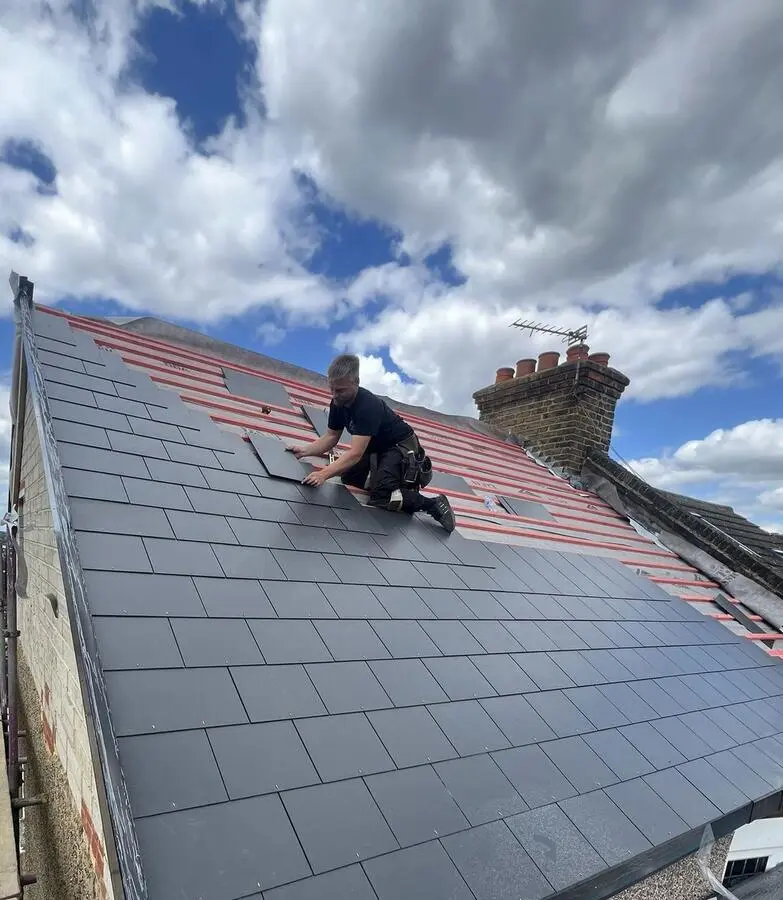
Written by Jordan — Owner, IKON Roofing Ltd
18 years' hands-on roofing experience across Kent and South East London. Every article is based on real jobs, real materials, and real pricing — not guesswork.