Last updated: September 2026
A lot of Kent and South East London's best housing stock — the Georgian and Victorian terraces in Rochester, the period properties around Sevenoaks and Chislehurst, the slate-roofed villas of Blackheath — sits inside a conservation area, and a fair amount of it is statutorily listed. Both statuses change what you're allowed to do to a roof, and they're governed by different rules. Get this wrong and you're not just risking a fine — you can be required to undo the work at your own cost. Here's how it actually works.
Conservation Area vs Listed Building — They're Not the Same Thing
These two get used interchangeably by homeowners, but they trigger different legal regimes, and mixing them up is the single biggest source of confusion we see.
A conservation area is a designation the local council applies to a street or neighbourhood to preserve its overall character. It doesn't mean every individual building is protected — it means the council has more control over what changes are allowed, particularly anything visible from the street.
A listed building is a specific, individual building the government has identified as being of special architectural or historic interest (Grade I, II*, or II). Listing applies to that building specifically, wherever it is, whether or not it sits in a conservation area.
A property can be one, both, or neither. A Victorian terrace in a Rochester conservation area might not be individually listed at all — in which case conservation area rules apply, but not listed building rules. A freestanding Georgian house might be listed but not in a conservation area. Knowing which applies to your property is the first thing to establish, and it's usually a quick check on your local council's planning portal or the National Heritage List for England.
Do You Need Planning Permission to Re-Roof in a Conservation Area?
For an unlisted property in a conservation area, routine like-for-like re-roofing — same material, same design, same colour — is often covered by permitted development and doesn't need a planning application. The catch is the word "often." Two things commonly remove that right:
The only reliable way to know is to check with the council's planning or conservation team before you commit to anything — Article 4 Directions vary street by street, and getting it wrong means potential enforcement action after the work's already done.
Listed Building Roofs Are a Different Regime Entirely
If your property is listed, the bar is higher — and it applies regardless of whether the work is visible from the street. Listed Building Consent can be required even for like-for-like repairs, because the legislation protects the building's special architectural or historic character as a whole, not just its street-facing appearance. Carrying out unauthorised work on a listed building is a criminal offence, and the council can require the work to be reversed at your own cost.
In practice, this means: don't assume a repair is "too minor" to need consent. Talk to the conservation officer first, in writing, before scaffolding goes up — even for something as simple as re-bedding a ridge or replacing a handful of slipped slates.
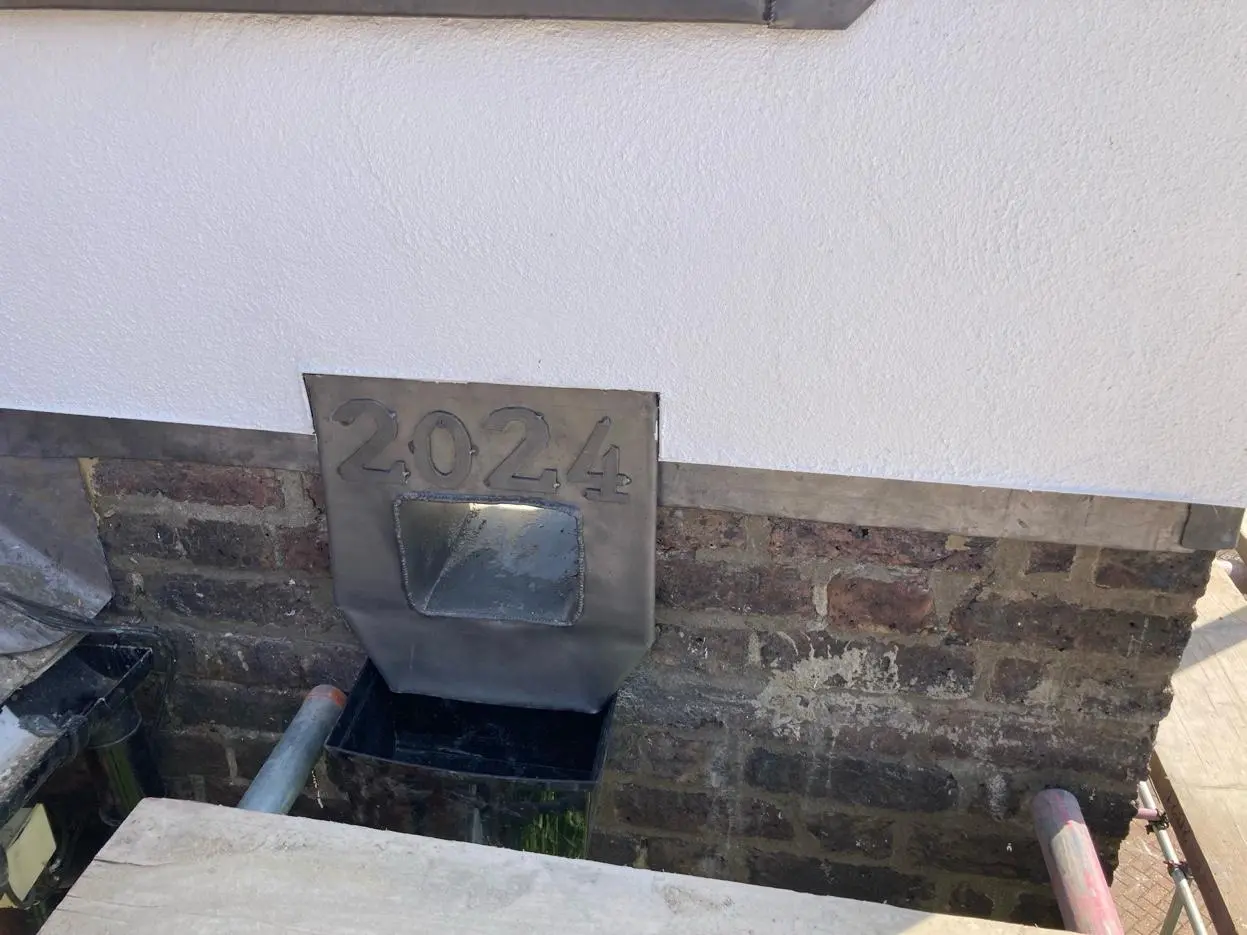
A traditional lead datestamp — the kind of detail conservation officers want preserved, not replaced with something modern.
Materials Conservation Officers Usually Expect
Whether you're dealing with a conservation area material condition or a Listed Building Consent, the officer is generally looking for the same thing: a genuine match to what was there originally, not the nearest modern equivalent.
This is why conservation area and listed building quotes are rarely the cheapest option on paper — the materials genuinely cost more, and the fixing methods take longer. It's not upselling; it's what gets the application approved and what the building actually needs.
How We Approach Conservation Area and Listed Building Roofing
We've worked on period properties across Rochester, Sevenoaks, Chislehurst, and Blackheath, sourcing natural slate, handmade clay tile, and traditional lead detailing to match what conservation officers are looking for. If we think your project needs planning permission or Listed Building Consent, we'll flag it during the inspection rather than let you find out halfway through the job — and we're happy to liaise directly with the conservation officer where that helps things move faster. Every installation still comes with our full IKON Integrity Guarantee — 15-year workmanship, 15-year manufacturer-backed materials, and a 10-year insurance-backed guarantee — heritage work included.
Recent example: see our case study on a reclaimed clay tile re-roof in a Stansted, Kent conservation area, with a leaded flat roof section over the rear extension.
Practical Steps Before You Start
Not sure whether your roof needs consent, or want an honest quote using the right materials from the start? Call 01634 907 024 or read more about our pitched roofing service.
Frequently Asked Questions
Not always. If your property isn't listed and there's no Article 4 Direction removing permitted development rights, like-for-like re-roofing in the same material is often permitted development. But changing the material, altering the roof shape, or adding rooflights or dormers usually does need planning permission in a conservation area, even where the same change would be permitted development outside one. Check with your local council's planning or conservation team before work starts — rules vary by council and by street.
If your property is statutorily listed (Grade I, II*, or II), you may need Listed Building Consent for roofing work even when it's like-for-like repair using matching materials — because the consent covers anything that affects the building's special architectural or historic character, not just visible changes. Carrying out unauthorised work to a listed building is a criminal offence. Always get written confirmation from the council's conservation officer before scaffolding goes up.
Usually not, if the existing roof is clay tile, natural slate, or another traditional material. Conservation officers typically require matching or like-for-like materials to preserve the street's character, and will often specify natural slate, handmade clay tile, or a close-matching manufactured alternative rather than allow a switch to standard concrete tile. This is one of the most common points of friction on conservation area re-roofs, so it's worth confirming material requirements before ordering anything.
The council can require the work to be reversed at your own cost, and unauthorised alteration of a listed building is a criminal offence that can carry a fine or, in serious cases, prosecution. It's a real risk, not a formality — always confirm what's needed with the conservation officer in writing before any work begins, even for repairs that look minor.
Yes. We regularly work on period and listed properties across Rochester, Sevenoaks, Chislehurst, and Blackheath, sourcing matching natural slate, handmade clay tile, and traditional lead detailing to satisfy conservation requirements. We'll flag early if we think your project needs consent, and we're happy to liaise directly with the conservation officer where that helps the application move faster.
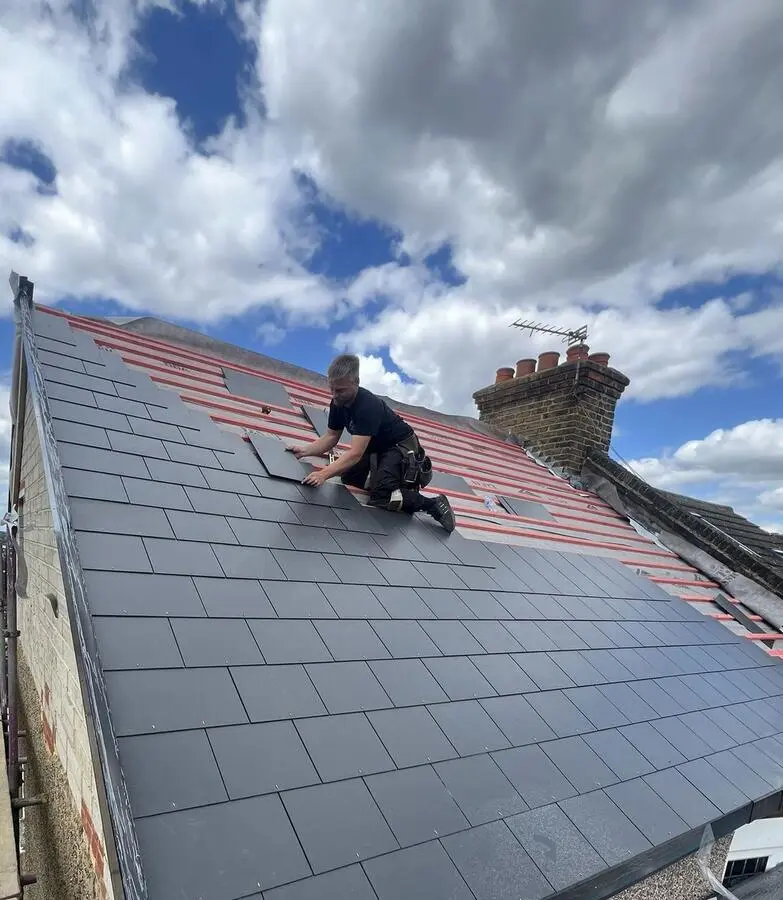
Written by Jordan — Owner, IKON Roofing Ltd
18 years' hands-on roofing experience across Kent and South East London, including period and listed properties. Every article is based on real jobs, real materials, and real conversations with conservation officers — not guesswork.